Advocacy Intern Reflections from Dr. Brent Arcayan
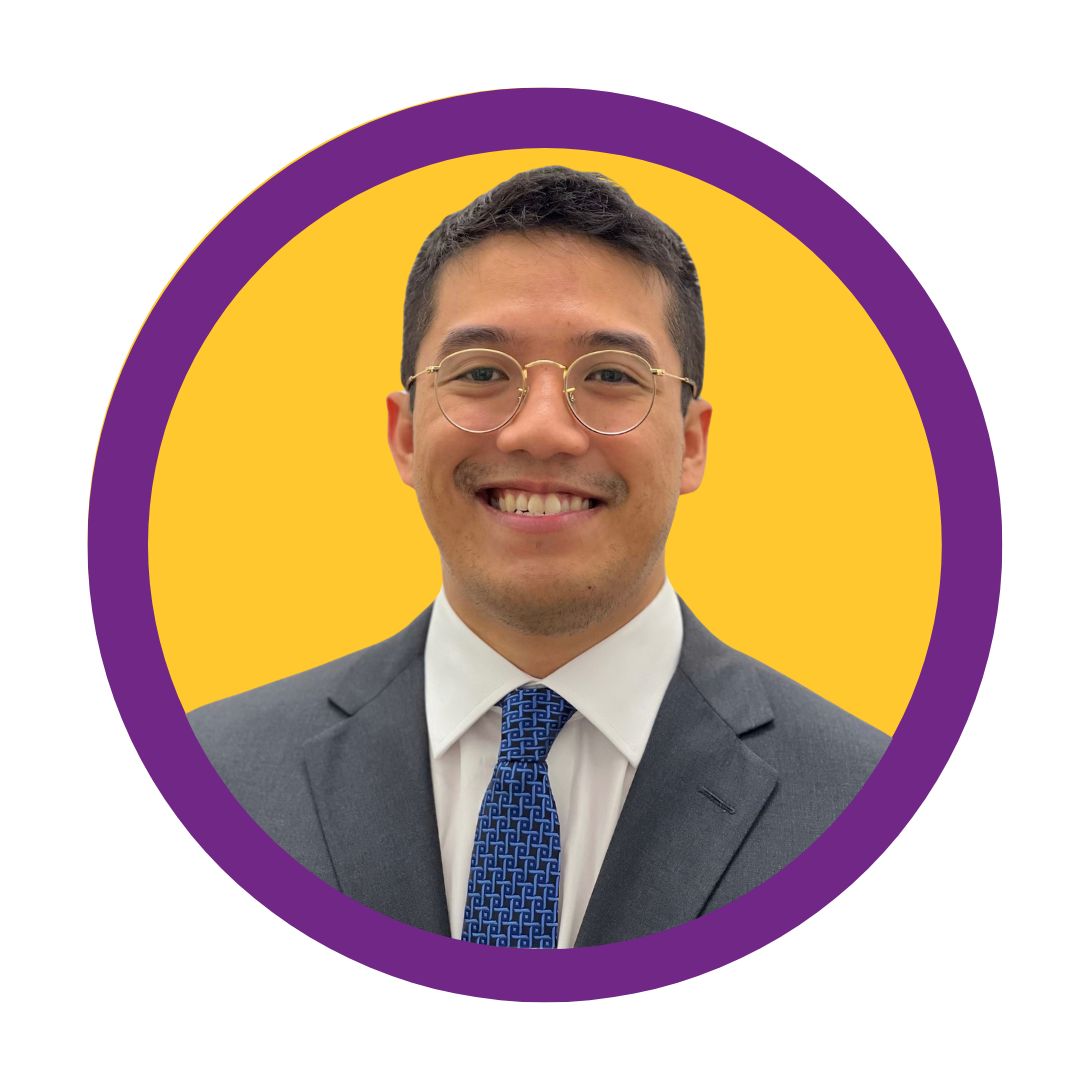
Brent Arcayan, MD
PGY 2
Internal Medicine
Mount Sinai - Morningside/West
End of Advocacy Internship Reflection: De-mystifying Advocacy
Brent Arcayan, MD
At the beginning of the ACP Advocacy Internship, although I had plenty of ideas and desires, I lacked the practical knowledge, contextual landscape, and the right connections in order to facilitate transforming generic and relatively empty statement like “I want to help the LGBTQ+ community!” into real-life tangible action and change. I am so incredibly grateful to have had the opportunity to spend the last four weeks diving into advocacy, learning from (and alongside) some of the most passionate and kind-hearted individuals, and feel like I am leaving this internship with an entire tool-box full of shiny new tools in my itinerary. Perhaps most importantly, this experience has solidly nudged my career path trajectory even further in a direction I was always curious about but never felt I had the confidence or ability to pursue to the best of my ability!
Throughout my beginning-of-rotation “reflection,” I spent a lot of time discussing my thoughts around the physician I currently am, and the physician that I have always envisioned becoming – a physician that utilizes their knowledge and power to enact positive change in this world, especially for the communities most vulnerable to being taken advantage of, or most vulnerable to inequity. Growing up, the idea of becoming this physician always seemed so incredibly far away and in the distance – especially as undergraduate and graduate medical training places such an emphasis on traditional training. In medical school and even early parts of residency, education and training always felt like “I am learning how to become a great medical doctor now, and unfortunately things like advocacy and passion projects like LGBTQ+ health will just have to wait.” For a lot of residency, it has always felt like some level of meaning and gratifying was missing, but I could not quite place how or why I was feeling this way. However, now I understand better what has been missing – as there were some days during this advocacy internship where I felt closer to being the physician I had always wanted to be, than I ever did in the hospital or in a clinic.
Getting to know and taking care of one patient can be incredibly impactful and gratifying, however, especially while working in the hospital, there was always this feeling of helpless that happens when the patient leaves those doors, as they are subject once again to the often-cruel demands that life can be. For example, every day at our hospital there is likely an elderly patient being admitted after being “found down,” helpless on the ground for hours, which could be prevented by making Health Aides more accessible to all, and not just to those that can afford to private pay for an aide if their insurance won’t cover the cost. It was, and is, heartbreaking to see the endless cycle of admitting the same “story” of patient, and feeling powerless to prevent this from happening and only getting to see the poor end outcome (ending up in the hospital, talking to you about to get admitted).
However, after discovering that not only was this an issue that many people know about but organizing efforts around, even that discovery alone was enough to help me feel more empowered to better care for my patients. No longer did I feel like all of the my work and medicine was purely just a band-aide, but a small piece of the bigger picture.
This past December marked the half-way point of three-years of internal medicine residency training completed so far, leaving roughly 18 months left for an otherwise decades-long journey. Since the beginning, I knew that becoming an “attending physician,” was one way of obtaining the knowledge, power, and voice that could be used to make a difference with the LGBTQ+ community I identified a part of. This internship, more than any experience in my training thus far, has afforded me a new set of tool to help broaden the reach I hope to achieve in medicine, and for that I will be forever grateful.
De-mystifying Advocacy
This past December marked the half-way point of three-years of internal medicine residency training completed so far, leaving roughly 18 months left for an otherwise decades-long journey. Since the beginning, I knew that becoming an “attending physician,” was one way of obtaining the knowledge, power, and voice that could be used to make a difference with the LGBTQ+ community I identified a part of.
As of writing this, I am staring down the barrel of “in one and a half years, I am supposed to be emerge from my cocoon at the end of an 11-year journey as an intelligent, spectacle-donning “attending physician,” capable of knowing and handling all –- and realizing that while I have gotten fairly good at interpreting labs, sending workups, and even managing critically ill patients in the hospital, there is still so much to "being a good doctor,” that there is for me to learn.
Knowing that the end of my training is nearer each day, I hope to take full advantage of the Advocacy Internship with the ACP to
1. Develop a better understanding of who I am, what type of community-oriented primary care physician I can be, and understanding all the ways I can better understand and advocate for my patients both inside and outside of the exam room
2. To “demystify ‘advocacy’” and spend time absorbing as much knowledge, language, and skills I am able to during these four weeks together. From the very concrete skills of understanding the legislative environment, how to navigate identify and intervene on bills, to broader skills of how to efficiently and effectively mobilize/organize a group around a cause, and how to foster a network of community.
The job and scope of a physician can feel so wide at times: one day in residency I can be in the ICU placing a central line so the intravenous epinephrine can induce the heart to better perfuse vital organs in the coming minutes, and another day I can spend an afternoon in clinic helping a patient fill out his application for a reduced fare Metro card. Through my experiences in residency, the experiences I have found most grounding and impactful are not necessarily when patients are critically ill but rather in health prevention and promoting health negating poor health outcomes. For example, I recently had the opportunity to develop a 1-hour lecture to be given to ~30 co-residents based on LGBTQ+ health. I decided to use the hour to invite two transgender patients to speak on a “patient panel,” to an audience of ~30-40 of our co-residents to help bridge a known knowledge and comfortability gap within our own program. Although the development and coordination of an event like this felt wholly uncomfortable and outside of my comfort zone, it was incredibly gratifying to hear from my co-residents how valuable they found the patient panel and to know I did something (no matter how small or big) to help narrow this health equity gap.
I am so incredibly appreciative of the opportunity to take this four-week elective during my medical training where I am able spend some time away from the busy medical floors or critical care units, and dedicate myself to "de-mystifying advocacy,” by spending real time on the ground learning from and absorbing as much as I can from you all! With the end of residency nearing, I am realizing that once this 11-year training project ends, it is only followed by a lifetime of practicing medicine but on your own, without Arts & Practice lectures or elective time for Advocacy Internships – which highlights this golden opportunity with the ACP to learn all I can before being pushed out of the nest, and into the unknown.